logo
Shenzhen First Tech Co., Ltd.
ÜBER US

Shenzhen First Tech Co., Ltd.

Shenzhen First Tech Co., Ltd wurde 2017 gegründet und ist ein One-Stop-Lösungsanbieter für Solar- und Batteriespeicherlösungen. First Tech beschäftigt sich mit der Forschung, Entwicklung, Produktion, dem Vertrieb und dem Service von kommerziellen und industriellen Energiespeichersystemen, Heimspeichersystemen, Lithium-Ionen-Akkupacks, Solar-Hybrid-Wechselrichtern, Solar-Optimierern usw.First Tech hat seinen Sitz in Shenzhen City, Provinz Guangdong, China. Die Fabrik hat die Zertifizierung des ...
Ansicht mehr

2017

Jahr der Gründung

16000000 +

Jahresumsatz

150 +

Mitarbeiter

Neuigkeiten
1stess Factory Handling Footage Highlights Delivery Planning for Containerized BESS
2026-09-18
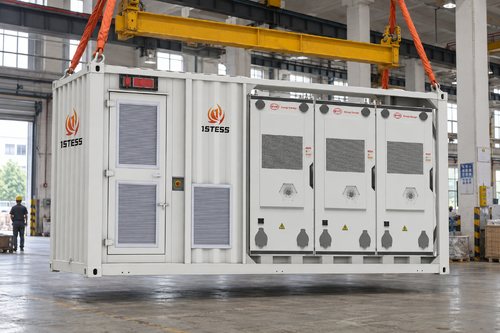
.gtr-container-xyz123 { font-family: Verdana, Helvetica, "Times New Roman", Arial, sans-serif; color: #333; line-height: 1.6; padding: 15px; box-sizing: border-box; font-size: 14px; } .gtr-container-xyz123 p { margin-bottom: 1em; text-align: left !important; font-size: 14px; } .gtr-container-xyz123 h1 { font-size: 18px; font-weight: bold; color: #000000; margin-top: 1.5em; margin-bottom: 0.8em; text-align: left; } .gtr-container-xyz123 h2 { font-size: 18px; font-weight: bold; color: #000000; margin-top: 1.5em; margin-bottom: 0.8em; text-align: left; } .gtr-container-xyz123 a { color: #000000; text-decoration: none; } .gtr-container-xyz123 a:hover { text-decoration: underline; color: #0056b3; } .gtr-container-xyz123 .gtr-table-wrapper { width: 100%; overflow-x: auto; margin-bottom: 1em; } .gtr-container-xyz123 table { width: 100%; border-collapse: collapse !important; border-spacing: 0 !important; margin-bottom: 1em; font-size: 14px; min-width: 600px; } .gtr-container-xyz123 table th, .gtr-container-xyz123 table td { border: 1px solid #ccc !important; padding: 10px !important; text-align: left !important; vertical-align: top !important; word-break: normal !important; overflow-wrap: normal !important; } .gtr-container-xyz123 table th { background-color: #f0f0f0; font-weight: bold; color: #000000; } .gtr-container-xyz123 table tr:nth-child(even) { background-color: #f9f9f9; } @media (min-width: 768px) { .gtr-container-xyz123 { padding: 20px; } .gtr-container-xyz123 h1 { font-size: 20px; } .gtr-container-xyz123 h2 { font-size: 20px; } .gtr-container-xyz123 table { min-width: auto; } } 1stess Factory Handling Footage Highlights Delivery Planning for Containerized BESS Factory handling is a practical part of bringing a battery energy storage project from equipment selection to site deployment. Footage supplied by 1stess shows a white branded container being lifted and moved inside a factory using a yellow lifting frame and orange slings. For importers, procurement teams and EPC contractors, this stage brings attention to the logistics and engineering details that should be agreed before dispatch. Alongside this factory view, the 1stess EnerCube product specification outlines a liquid-cooled containerized BESS range for commercial and industrial energy storage, solar-plus-storage and microgrid applications. The footage illustrates indoor handling; the following specifications describe the EnerCube range, rather than identifying the exact configuration shown in the video. Three Capacity Options for Project-Based Procurement EnerCube uses BYD Blade Battery LiFePO4 technology and liquid-cooled DC battery cabinets. The datasheet lists three configurations: Model System capacity at beginning of life Rated AC output System configuration EnerCube P860C1864 1,864 kWh 860 kVA 4 × MC-Cube EnerCube P1075C2330 2,330 kWh 1,075 kVA 5 × MC-Cube EnerCube P1375C2796 2,796 kWh 1,375 kVA 6 × MC-Cube These options give buyers a defined starting point for comparing storage capacity against site demand and operating schedules. Final selection should also account for usable energy, discharge requirements, operating conditions and the agreed control strategy. The rated AC values above are apparent power in kVA, not a statement of guaranteed real power in kW. Container Dimensions That Inform Transport and Site Planning The EnerCube datasheet specifies a 20HQ container measuring 6,058 × 2,438 × 2,896 mm and a maximum weight of approximately 25,000 kg. These figures are important inputs for transport planning, unloading arrangements, site access and foundation design. For an importer, a useful pre-dispatch discussion goes beyond the equipment price. It should establish the final shipping dimensions and weight, handling instructions, packing details, applicable transport documentation and the agreed delivery scope. EPC contractors also need to coordinate the equipment footprint and unloading sequence with the site layout. The factory footage makes container handling visible, but it does not establish the destination, dispatch date, shipment quantity or arrival status. Those details should be confirmed for each order. Electrical and Communication Interfaces for EPC Integration EnerCube is specified for a three-phase, three-wire connection, with a rated AC voltage of 690 V and rated frequency of 50/60 Hz. An isolation transformer is optional. Buyers should confirm the transformer and interconnection scope against the project's electrical design instead of assuming a direct connection to every local distribution network. The listed communication interfaces are RS485 and Ethernet, with Modbus TCP/RTU protocols. These provide a starting point for discussions about site monitoring and energy management system integration. The final point list, control functions and interface responsibilities should be agreed during engineering review. This level of detail helps procurement teams compare quotations on a consistent basis and gives system integrators a clearer view of the work required around the battery energy storage system. Applications: Industrial Sites, Solar Storage and EV Charging The datasheet identifies industrial park energy storage, solar-plus-storage EV charging stations and solar-storage microgrids as application areas. These include peak-load shifting, time-of-use tariff arbitrage, storage of surplus solar generation and backup power within a suitably engineered system. For industrial buyers, the relevant question is how the selected capacity and operating strategy match the facility's load profile. For solar and charging projects, the discussion shifts to generation patterns, charging demand and connection capacity. Project economics depend on the actual tariff, operating schedule and system design; a capacity figure alone does not establish a savings rate or payback period. Environmental Limits, Maintenance and Warranty The specification lists IP65 protection for the PCS and IP55 for the battery cabinet, with a C3 container anti-corrosion grade. The operating temperature range is −30°C to +55°C, with derating above 45°C. Site conditions should therefore be reviewed before final equipment selection. EnerCube is described as supporting modular operation and maintenance and flexible expansion. The datasheet also lists automatic fire detection and alarm, with aerosol extinguishing offered as an option. Buyers should confirm the supplied protection configuration and supporting technical documents for the selected model and project. The stated warranty is five years, extendable to ten years, subject to the agreed commercial terms. Procurement teams should clarify coverage, extension conditions, service responsibilities and any performance commitments in the contract. Discuss Your Containerized Energy Storage Requirements For importers and EPC contractors evaluating a liquid-cooled containerized BESS, a useful enquiry includes the target energy capacity, required real and apparent power, connection voltage, project location, application and delivery schedule. Site temperature conditions, transport access and monitoring requirements also help define the scope. Contact 1stess to discuss the appropriate EnerCube configuration and request the technical and delivery information needed for your project review. Website: https://www.1stess.com
Mehr gelesen
Latest company news about 1stess Factory Handling Footage Highlights Delivery Planning for Containerized BESS
1stess Highlights EnerCube Containerized BESS for Industrial and Solar Storage Projects
2026-09-16
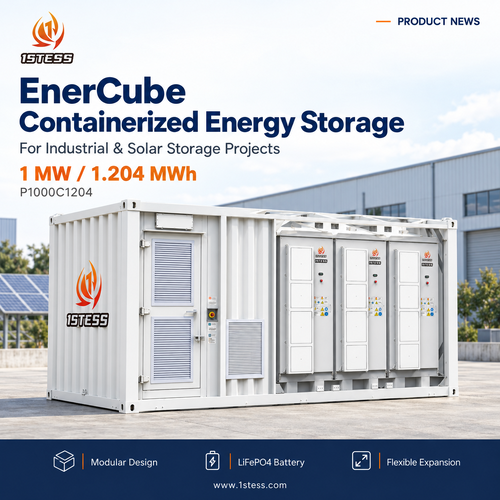
.gtr-container-xyz123 { font-family: Verdana, Helvetica, "Times New Roman", Arial, sans-serif; color: #333; line-height: 1.6; padding: 20px; background-color: #f8f8f8; border-radius: 8px; box-shadow: 0 4px 12px rgba(0, 0, 0, 0.05); max-width: 960px; margin: 20px auto; box-sizing: border-box; } .gtr-container-xyz123 p { font-size: 14px; margin-bottom: 1em; text-align: left; } .gtr-container-xyz123 strong { font-size: 18px; font-weight: bold; color: #000000; display: block; margin-top: 1.5em; margin-bottom: 0.8em; padding-bottom: 5px; border-bottom: 2px solid #000000; } .gtr-container-xyz123 a { color: #000000; text-decoration: none; transition: color 0.3s ease; } .gtr-container-xyz123 a:hover { color: #333333; text-decoration: underline; } @media (min-width: 768px) { .gtr-container-xyz123 { padding: 30px; } } 1stess Highlights EnerCube Containerized BESS for Industrial and Solar Storage Projects 1stess is highlighting its EnerCube containerized battery energy storage system for importers, procurement teams and EPC contractors evaluating commercial and industrial energy storage projects. The P1000C1204 model combines 1 MW rated output with 1.204 MWh of beginning-of-life battery capacity in a 20-foot high-cube container, with applications including industrial parks, solar-plus-storage and EV charging infrastructure. Accompanying product footage shows a container undergoing a water-spray inspection. For professional buyers, the scene brings attention to a practical procurement question: how should enclosure protection, site conditions and acceptance documentation be evaluated before outdoor deployment? A Modular 1 MW Battery Energy Storage System EnerCube uses 280 Ah lithium iron phosphate (LiFePO4) cells and a modular battery architecture. The P1000C1204 specification lists a 627–806 V battery voltage range and a 400 V, three-phase, three-wire interface on the power conversion system (PCS) side. Ethernet and RS485 communication, with Modbus TCP/IP and Modbus RTU protocols, provide defined interfaces for project integration. For EPC contractors and system integrators, these specifications provide a starting point for evaluating electrical connections and control requirements. The modular design supports operations and maintenance, while parallel connection of multiple units offers a route to system expansion. Final sizing and integration should follow the project load profile and connection requirements. Outdoor Protection and Thermal Management The specified enclosure protection is IP55 for the battery compartment and IP54 for the electrical compartment. Battery temperature is managed by HVAC, while the electrical compartment uses forced-air cooling. The system also incorporates inter-cluster isolation, a fire alarm system and FM200 fire suppression. These details help procurement teams define the equipment scope and assess installation conditions. The stated operating temperature range is −30°C to 55°C, with output derating above 45°C. The water-spray footage illustrates an inspection activity; formal ingress-protection verification and project acceptance should be based on the applicable test documentation. Applications in Industrial Parks and Solar Charging Sites For industrial parks and commercial facilities, the containerized BESS can support peak shaving, load shifting and time-of-use tariff optimization. Project value depends on the site demand profile, electricity tariff and operating strategy, so buyers should assess the proposed configuration against actual consumption data. In solar-plus-storage projects, EnerCube can store surplus solar generation for later use. Combined with EV charging infrastructure, battery storage can help manage charging demand and shift energy use away from peak periods. This makes solar energy storage and EV charging energy storage relevant applications for developers planning coordinated generation, storage and charging systems. The EnerCube product literature also identifies grid frequency regulation as a supported application. Participation in grid ancillary services requires confirmation of the selected configuration, controls and local grid requirements. Transport Planning and Long-Term Service The P1000C1204 uses a 20-foot high-cube container measuring 6,058 × 2,438 × 2,896 mm, with a listed weight of 18,500 kg. These figures give importers and contractors concrete inputs for freight arrangements, lifting plans, foundations and site access reviews. For purchasing teams, a complete BESS specification should also define commissioning responsibilities, acceptance criteria, maintenance access and warranty coverage. The datasheet lists a five-year warranty that can be extended to ten years; buyers should confirm the applicable terms in the project quotation. Certification and grid-connection documentation should be checked against the exact model and destination requirements. Discuss Your Containerized Energy Storage Project with 1stess 1stess provides energy storage solutions for residential, commercial and industrial applications. Importers, distributors and EPC contractors considering EnerCube can contact the team to discuss system configuration and request technical documentation for their project review. Share your project country, required power and energy capacity, grid voltage, load profile, solar or EV charging requirements, and target delivery schedule. This information helps define the technical scope for a project-specific containerized BESS quotation. Contact 1stess: www.1stess.com
Mehr gelesen
Latest company news about 1stess Highlights EnerCube Containerized BESS for Industrial and Solar Storage Projects
Find 1stess on Facebook & LinkedIn | Energy Storage Solutions
2026-09-15
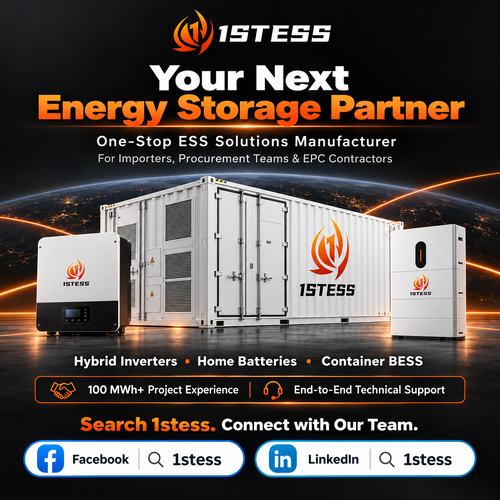
.gtr-container-f7e9d2 { font-family: Verdana, Helvetica, "Times New Roman", Arial, sans-serif; color: #333; line-height: 1.6; padding: 0; margin: 0; } .gtr-container-f7e9d2 p { font-size: 14px; margin-bottom: 1em; text-align: left; } .gtr-container-f7e9d2 .gtr-heading-1 { font-size: 18px; font-weight: bold; color: #000000; margin-bottom: 1.2em; text-align: left; } .gtr-container-f7e9d2 .gtr-heading-2 { font-size: 18px; font-weight: bold; color: #000000; margin-top: 1.8em; margin-bottom: 1em; text-align: left; } .gtr-container-f7e9d2 strong { color: #000000; } @media (min-width: 768px) { .gtr-container-f7e9d2 { padding: 20px; } } Connect with 1stess on Facebook and LinkedIn for One-Stop Energy Storage Solutions For energy storage importers, procurement teams and EPC contractors, evaluating a manufacturing partner involves more than comparing product prices. Product coverage, technical coordination and responsive communication all matter when planning a residential or commercial energy storage project. 1stess invites professional buyers to search “1stess" on Facebook and LinkedIn and connect with our team to discuss product requirements, sourcing plans and project needs. As the energy storage brand of Shenzhen First Tech Co., Ltd., 1stess is a one-stop solution manufacturer for residential, commercial and industrial energy storage systems. Our core portfolio includes hybrid inverters, home batteries and containerized battery energy storage systems. Three Core Product Lines for Your Sourcing Needs Hybrid Inverters For solar installers, distributors and EPC contractors, inverter selection starts with the application. Share your grid conditions, power requirements and battery configuration with our team to discuss suitable solar hybrid inverter options and system compatibility. Home Batteries Our residential battery storage portfolio supports buyers serving the home energy storage market. Discuss your required battery capacity, installation format and inverter communication requirements to identify an appropriate configuration for solar self-consumption and backup power applications. Container BESS For commercial and industrial energy storage projects, 1stess provides container BESS solutions with project-specific configuration support. Requirements may include power and energy capacity, PCS and EMS integration, cooling, fire protection and site conditions. Applications include peak shaving, load shifting, solar energy storage and backup power. Technical Support Throughout the Project A clear specification at the beginning helps buyers coordinate the stages that follow. 1stess provides end-to-end technical service support, covering solution design, product selection, system configuration, delivery coordination, installation guidance and after-sales communication. With 100 MWh+ of project experience and a founder with 15+ years of industry experience, we help professional buyers discuss both product requirements and practical project considerations. For procurement teams reviewing compliance, our team can provide applicable certification documentation for the selected products and discuss target-market requirements. Support for International Procurement 1stess focuses on overseas markets and supports professional buyers through export-oriented communication and order coordination. Our service response commitment is within one hour on weekdays and within four hours on weekends. Financing options can also be discussed for large orders, subject to order assessment and agreed terms. Whether you are expanding a distribution portfolio or sourcing equipment for an EPC project, early communication helps clarify technical scope, documentation needs and delivery expectations. Search “1stess" and Start the Conversation Find 1stess on Facebook and LinkedIn to connect with our team. To help us respond with relevant information, send your target country, application, required power and battery capacity, purchase quantity and expected delivery schedule. From hybrid inverters and home batteries to container BESS, connect with 1stess to discuss your next energy storage requirement.
Mehr gelesen
Latest company news about Find 1stess on Facebook & LinkedIn | Energy Storage Solutions
Strom für die grüne Zukunft Koreas: Integrierte Energiespeicherlösungen der nächsten Generation für Haushalte und Unternehmen
2026-07-15
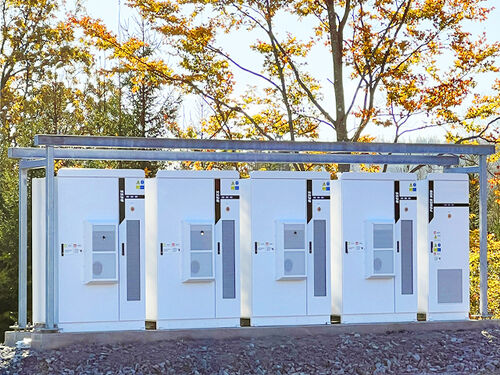
SEOUL – 15. Juli 2026 Während Südkorea seinen Übergang zu einem Netz mit überwiegend erneuerbaren Energien beschleunigt, wird eine neue Welle integrierter Batterie-Energiespeicherlösungen für den Außenbereich die Art und Weise verändern, wie Haushalte und Gewerbeunternehmen ihren Stromverbrauch verwalten. Branchenexperten und Early Adopters trafen sich heute im COEX Convention Center in Seoul, um die neuesten Fortschritte in der Energiespeichertechnologie zu erkunden – Innovationen, die versprechen, die Stromrechnungen zu senken, die Netzstabilität zu verbessern und Südkorea seinen ehrgeizigen Zielen für erneuerbare Energien für 2030 näher zu bringen. Ein Markt, der für explosives Wachstum bereit ist Der südkoreanische Markt für Energiespeichersysteme (ESS) befindet sich in einem strukturellen Umbruch. Branchenschätzungen zufolge wird der fortschrittliche Energiespeichermarkt des Landes allein im Jahr 2026 voraussichtlich 3,5 bis 5,0 GW Stromkapazität und 8 bis 12 GWh Energiekapazität bereitstellen, was einem Marktwert von 2,5 bis 3,8 Milliarden US-Dollar entspricht. Auch das Wohnsegment gewinnt mit geschätzten jährlichen Installationen zwischen 80.000 und 110.000 Einheiten im Wert von etwa 450 bis 550 Millionen US-Dollar bemerkenswert an Dynamik. Dieses Wachstum wird durch eine aggressive Regierungspolitik vorangetrieben. Das Ministerium für Klima, Energie und Umwelt hat kürzlich mit neun ausgewählten Unternehmen – darunter LG Energy Solution, SK Eternics und Korea Electric Power Corporation KDN – eine Absichtserklärung für das „KI-basierte ESS Construction Support Project 2026“ unterzeichnet.. Ziel der Initiative ist es, durch den Bau von ESS mit einer maximalen Leistung von 128 Megawatt und 640 MWh Speicherkapazität über 32 Verteilungsleitungen im ganzen Land 182,4 Megawatt Solarstromanlagen ins Netz zu bringen. Für die nächsten fünf Jahre ist ein Budget von 558,6 Milliarden Won vorgesehen. Erfüllung der einzigartigen geografischen und wirtschaftlichen Bedürfnisse Koreas Das bergige Gelände und die ausgedehnte Küste Südkoreas bieten sowohl Chancen als auch Herausforderungen für die Integration erneuerbarer Energien. Regionen wie Honam und Jeju, in denen die Kapazitäten für erneuerbare Energien bereits ausgelastet sind, sind mit erheblichen Netzüberlastungen konfrontiert. Die neuen integrierten Speicherlösungen begegnen diesen Herausforderungen direkt mit flexiblen Konfigurationen, die netzgebundene, netzunabhängige und PV-gekoppelte Vorgänge unterstützen. Für Haushalte in Seouls dicht besiedelten Apartmentkomplexen ermöglichen die Systeme die Integration von Balkon-PV. Dadurch können die Bewohner tagsüber erzeugte Solarenergie für die Nutzung nach Sonnenuntergang speichern und so den Stromverbrauch zu Spitzenzeiten effektiv reduzieren. Für Unternehmen in Industrieparks in ganz Chungcheongnam-do, wo die Provinzregierung Subventionsprogramme für Solar- und ESS-Installationen gestartet hat, bieten diese Lösungen eine Möglichkeit, die Betriebskosten zu senken und RE100-Verpflichtungen zu beschleunigen. Senkung der Stromkosten durch Peak Shaving Aufgrund der nutzungsabhängigen Strompreise in Südkorea können die Tarife zu Spitzenzeiten deutlich höher sein als zu Nebenzeiten. Für private Verbraucher, deren monatlicher Stromverbrauch 1.000 Kilowattstunden übersteigt, beträgt die Nutzungsgebühr in den Hauptsommer- und Wintermonaten 709,4 Won pro Kilowattstunde. Energiespeichersysteme ermöglichen es Benutzern, Batterien in kostengünstigen Nachtstunden aufzuladen und in teuren Spitzenzeiten zu entladen – eine Praxis, die als „Peak Shaving“ bekannt ist und die monatlichen Stromrechnungen drastisch senken kann. „Die Wirtschaftslage ist überzeugend“, sagte ein leitender Energieanalyst, der auf der heutigen Veranstaltung sprach. „Angesichts steigender Endkundenstrompreise und wachsender Besorgnis über Netzinstabilität suchen sowohl Hausbesitzer als auch Geschäftsbetreiber nach Lösungen, die ihnen die Kontrolle über ihre Energiekosten ermöglichen. Diese integrierten Speichersysteme liefern genau das.“ Sicherheit und Zuverlässigkeit: oberste Priorität Nach früheren Brandvorfällen im ESS haben die südkoreanischen Behörden die Sicherheitsvorschriften deutlich verschärft. Der überarbeitete Bewertungsrahmen legt nun verstärkten Wert auf die KC Safety-Zertifizierung, insbesondere im Hinblick auf Brandschutzstandards für Lithium-Ionen-Batteriesysteme. Die neue Generation von Lagerschränken berücksichtigt diese Probleme mit den automatischen Feuerlöschsystemen FM200 (mit Novec1230 oder Aerosol-Optionen erhältlich), einem robusten IP-geschützten Außenschutz und einem fortschrittlichen Wärmemanagement, das Klimaanlage und Zwangsluftkühlung kombiniert – und so einen zuverlässigen Betrieb auch bei den extremen saisonalen Temperaturen in Korea zwischen -20 °C und 50 °C gewährleistet. Batteriezellen sind nach IEC 62619, UL1973 und UL9540A zertifiziert, während das Stromumwandlungssystem die Standards G99, EN50549, AS4777.2 und VDE4105 erfüllt – was ein Höchstmaß an Sicherheit und Konformität für den koreanischen Markt bietet. Flexible Konfigurationen für jeden Bedarf Die integrierten Lagerschränke unterstützen ein breites Anwendungsspektrum: On-Grid + PV:EMS-gesteuertes Laden und Entladen zur Spitzenlastreduzierung, Reduzierung der Stromrechnung bei gleichzeitiger Maximierung des solaren Eigenverbrauchs. On-Grid + Off-Grid + PV:Nahtlose Umschaltung innerhalb von 20 Millisekunden bei Stromausfällen, um eine unterbrechungsfreie Stromversorgung kritischer Back-End-Lasten sicherzustellen. On-Grid + PV + Ladestationen:Intelligente Koordination zwischen Photovoltaik, Energiespeicherung, Versorgung und DC-Ladesäulen – ideal für die wachsende Infrastruktur für Elektrofahrzeuge in ganz Korea. Flexible Erweiterung:Unterstützung für bis zu drei Batterieschränke parallel, mit nahezu unbegrenzten netzinternen Parallelverbindungen – so können Systeme bei steigendem Energiebedarf von 46 kWh auf über 207 kWh skaliert werden. Eine Vision für Energieunabhängigkeit Da Südkorea anstrebt, die Stromerzeugung aus erneuerbaren Energien bis 2030 auf 21,9 % des gesamten Stroms zu steigern – von heute etwa 9 % – wird die Rolle der Energiespeicherung immer wichtiger. Da die weltweite ESS-Nachfrage voraussichtlich von 312 GWh im Jahr 2024 auf 847 GWh im Jahr 2028 steigen wird, schwenkt Südkoreas Batterieindustrie aggressiv auf Speicherlösungen um. Für die Bewohner der Insel Jeju, wo der Anteil erneuerbarer Energien bis 2035 auf über 70 % steigen soll, bedeuten diese Speichersysteme mehr als nur Kosteneinsparungen – sie sind eine wesentliche Infrastruktur für Energieunabhängigkeit. Für Kleinunternehmer in den Industriegebieten von Busan bieten sie Schutz vor steigenden Stromkosten und Versorgungsunterbrechungen. Für Landwirte im ländlichen Gyeongsangbuk-do ermöglichen sie eine zuverlässige Stromversorgung für landwirtschaftliche Betriebe und verringern gleichzeitig die Abhängigkeit vom Stromnetz. „Hier geht es darum, Menschen zu stärken“, fügte der Analyst hinzu. „Ob Sie Hausbesitzer in einer Hochhauswohnung oder Fabrikleiter in einem Industriekomplex sind, die Kontrolle darüber, wann und wie Sie Strom verbrauchen, ist kein Luxus mehr, sondern eine Notwendigkeit.“ Blick nach vorn Der langfristige Ausschreibungsplan der Regierung zielt auf 55 GW Offshore-Windenergie bis 2035 abund laufende Investitionen von 321 Milliarden KRW in die Modernisierung verteilter Netze, wird die Nachfrage nach zuverlässigen, sicheren und skalierbaren Energiespeicherlösungen nur noch zunehmen. Die integrierten Batterie-Energiespeicherschränke für den Außenbereich, die heute auf dem koreanischen Markt erhältlich sind, stellen einen bedeutenden Schritt in Richtung einer widerstandsfähigeren, nachhaltigeren und erschwinglicheren Energiezukunft für alle dar.
Mehr gelesen
Latest company news about Strom für die grüne Zukunft Koreas: Integrierte Energiespeicherlösungen der nächsten Generation für Haushalte und Unternehmen
Weitere Produkte
Was haben sie gesagt
Sarah Wilson
Sarah Wilson
Die Energiespeicherlösung von First Tech hat für unser Unternehmen eine entscheidende Rolle gespielt: Sie hat uns zuverlässige Ersatzstromversorgung ermöglicht und uns dabei geholfen, unsere Energiekosten deutlich zu senken".
Die Energiespeicherlösung von First Tech hat für unser Unternehmen eine entscheidende Rolle gespielt: Sie hat uns zuverlässige Ersatzstromversorgung ermöglicht und uns dabei geholfen, unsere Energiekosten deutlich zu senken
Samantha Patel ist ein
Das Energiespeichersystem von First Tech hat unsere Erwartungen übertroffen, ist einfach zu bedienen, erfordert nur minimale Wartung und hat sich als wertvolles Mittel erwiesen, um die Kontinuität unserer Operationen zu gewährleisten.
David
David
Die Mitarbeiter der Shenzhen First Tech Co., Ltd. sind sehr kenntnisreich und immer bereit, bei allen Anfragen zu helfen.Sie haben sich die Zeit genommen, meine Bedürfnisse zu verstehen, und mir maßgeschneiderte Lösungen gegeben, die meine Erwartungen übertrafenIhre Liebe zum Detail und ihr Engagement für Qualität unterscheiden sie wirklich von anderen Unternehmen in der Branche.
Senden Sie Ihre Untersuchung
Bitte senden Sie uns Ihre Anfrage und wir werden Ihnen so schnell wie möglich antworten.
Senden Sie